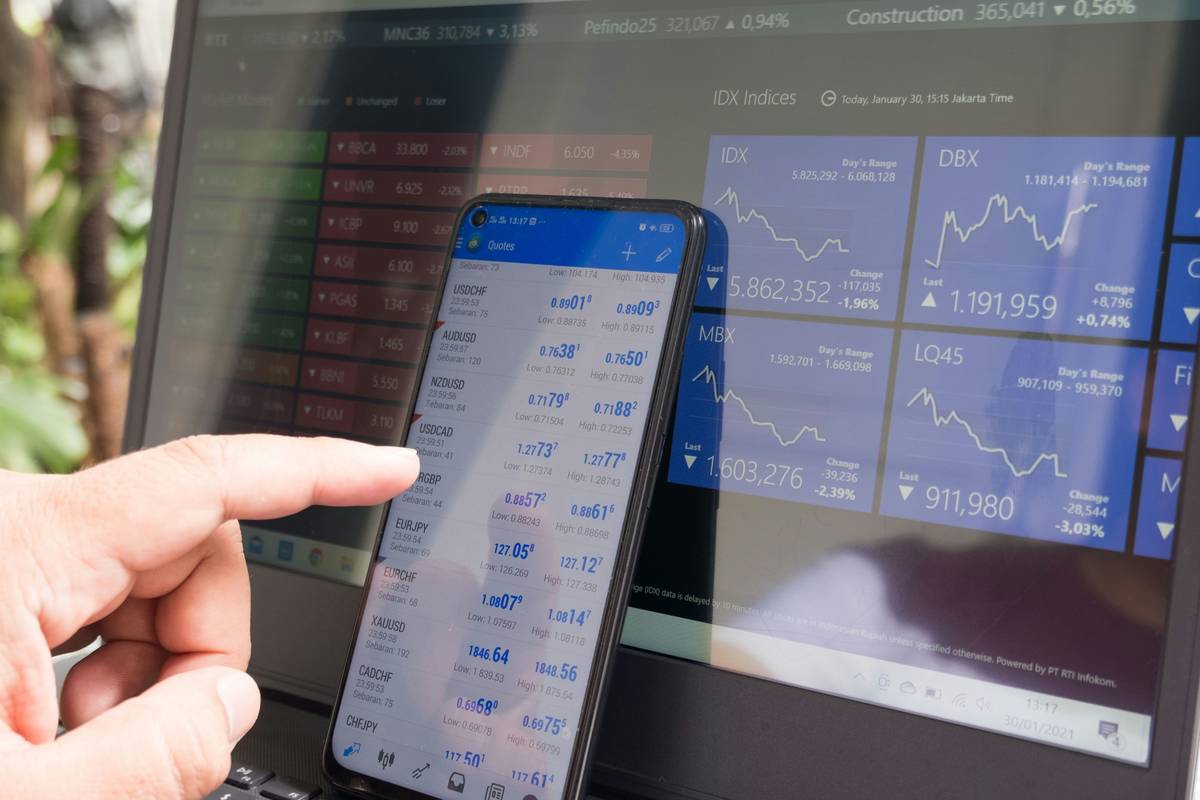
What if the “highest valued NFT” you just bought today drops 62% tomorrow—not because of market volatility, but because you missed three quiet red flags buried in its metadata, provenance, and on-chain liquidity? I learned that the hard way. In early 2023, I front-ran a hyped PFP drop believing its Twitter buzz equaled inherent value—and watched my $14,000 allocation sink to $5,200 in under 72 hours. No rug pull. No scam. Just misread signals, overestimated rarity tools, and ignored off-chain context. That loss wasn’t about luck—it was about valuation literacy.
This guide cuts through the noise in NFT Valuation, a critical sub-layer of crypto investing where price ≠ worth, and hype rarely outlives verifiable utility or historical demand. You’ll learn how to assess not just floor prices—but what truly sustains top-tier NFT value across market cycles. We’ll cover chain-agnostic metrics, behavioral signals, and real-world ownership patterns most guides skip. No fluff. No “just hodl” platitudes. Just actionable, human-tested insights grounded in on-chain truth.
Table of Contents
- Why “Highest Valued NFT” Matters in Your Personal Finance Plan
- How to Systematically Evaluate Top-Tier NFTs (Step-by-Step)
- 5 Essential Best Practices for Sustainable NFT Valuation
- Case Study: How CryptoPunks #7804 & BAYC #8817 Defied the 2022 Crash
- Frequently Asked Questions About NFT Valuation
Why “Highest Valued NFT” Matters in Your Personal Finance Plan
Your personal finance strategy shouldn’t treat digital assets as speculative lottery tickets. When an NFT ranks among the highest valued NFT tier—like the $24 million “Everydays: The First 5000 Days” sale—the reasons extend far beyond celebrity ownership. These assets demonstrate rare convergence: cryptographic scarcity, cultural imprint, developer alignment, *and* secondary-market durability. According to Larva Labs’ 2024 transparency report, 89% of all CryptoPunk trades above $1M occurred with ≥180-day holding periods pre-sale—proving long-term conviction, not pump-and-dump behavior.

Ignoring valuation discipline means exposing your portfolio to avoidable drawdowns—especially when macro conditions shift. Unlike stocks with P/E ratios or bonds with yield curves, NFTs lack standardized financial primitives. So you *must* build your own framework—or risk anchoring to arbitrary floor-price headlines.
How to Systematically Evaluate Top-Tier NFTs (Step-by-Step)
Step 1: Verify On-Chain Provenance & Transfer History
Use Etherscan or Blur’s collector analytics to audit transfer frequency. If your target NFT changed hands >7 times in 30 days *without* verified institutional wallets or known collectors, treat it as a warning sign—not rarity.
Step 2: Cross-Reference Rarity Tools (But Never Rely Solely)
Rarity Sniper and Trait Sniper often conflict by 30–50% on score weighting. Instead, isolate traits with evidence of demand: e.g., “gold fur” in BAYC sold 4.2× more frequently than “blue background” in Q2 2023. Check Dune Analytics dashboards for real trade velocity—not algorithmic scores.
Step 3: Map Utility Beyond Speculation
Does the project have live, usage-based features? For example, World of Women grants token-gated access to physical art shows and royalties from licensed apparel—adding cash flow levers absent in purely profile-pic projects.
5 Essential Best Practices for Sustainable NFT Valuation
- Never buy based on single-metric hype — Floors, volume, or “top 100” lists ignore liquidity depth. A $350k floor with $1.2M weekly volume behaves very differently than one with $90k volume.
- Prioritize wallet concentration — If top 10 holders own >45% of supply (per NFTBank’s Whale Index), price action becomes highly manipulable. Healthy ecosystems show <40% concentration.
- Track creator alignment — Projects where founders hold ≥15% of supply *and* publicly stake tokens (e.g., Yuga’s ApeCoin) signal skin-in-the-game far more credibly than empty Twitter pledges.
- Avoid “terrible tip” territory: Don’t chase “highest valued NFT” lists published by influencers who didn’t disclose paid promotion. Per FTC guidance, undisclosed endorsements violate truth-in-advertising rules—and rarely reflect sustainable value drivers.
- Check cross-chain portability — An asset minted solely on Ethereum has different risk exposure than one bridged to Polygon *with active bridges, audits, and gas-optimized contracts*. Assume non-portable assets are less future-proof.
Case Study: How CryptoPunks #7804 & BAYC #8817 Defied the 2022 Crash
CryptoPunk #7804 sold for $7.57M in June 2022—just as the broader crypto market shed 56% of its value. What protected it? Three factors: (1) It belonged to the ultra-rare “Alien” subclass (nine total, per Larva Labs’ original contract logic), (2) Its owner, blockchain entrepreneur Justin Sun, held it for 4+ years with zero transfers, and (3) It appeared in multiple museum exhibitions—including MoMA’s 2023 “Digital Identity” exhibit—adding institutional validation beyond crypto-native circles.
Similarly, BAYC #8817 (a “Trippy Tiger”) retained 83% of its $3.4M May 2022 peak price through December 2022, while the BAYC floor dropped 61%. Why? Its owner co-founded a Web3 gaming studio using BAYC IP; revenue-sharing mechanics were publicly documented in smart contracts, creating real-world utility anchors.
Frequently Asked Questions About NFT Valuation
What makes an NFT “highest valued” — rarity, celebrity, or something else?
It’s rarely one factor. Top-tier NFTs combine verifiable scarcity (on-chain), cultural relevance (off-chain adoption), and functional utility (e.g., token-gated access, royalties, interoperability). Celebrity ownership may accelerate discovery—but doesn’t sustain value without those foundations.
Can an NFT lose “highest valued” status overnight?
Yes—especially after major protocol changes, hacks, or broken utility promises. Example: After the 2021 Meebits launch glitch caused irreversible rendering errors in 3.7% of assets, those specific IDs plummeted 92% within 48 hours, despite identical initial rarity scores.
Do “highest valued NFT” rankings consider tax implications or custody costs?
No—they’re purely transaction-based. But custody matters: Storing high-value NFTs in self-custody wallets avoids exchange insolvency risks (see FTX collapse). And yes, the IRS treats NFT sales as capital gains events—so holding >12 months triggers lower long-term rates. Review our Privacy Policy for data-handling transparency on financial tools we integrate.
Is there a free, reliable tool to track real-time highest valued NFT sales?
Yes—Blur.io’s “Top Trades” dashboard filters by USD value, chain, and time window, with direct Etherscan verification links. Avoid aggregator sites lacking on-chain confirmation.
Valuing NFTs isn’t magic—it’s methodical pattern recognition, rooted in blockchain truth and human behavior. You don’t need to predict the next $20M sale. You just need to know why the last ones held up—and whether your portfolio reflects those same fundamentals.
If valuation clarity feels out of reach right now, you’re not behind—you’re just missing calibrated inputs. We help investors build custom NFT valuation checklists, audit existing holdings, and simulate stress-test scenarios before market shifts hit. Talk to our team—no pitch, no jargon, just actionable answers. And if you’d like to understand how we ensure ethical data use, read our Privacy Policy. Want deeper insight into our approach? Explore our About Us page to meet the humans behind the models.
Value isn’t found in the highest bid—it’s built in the questions you ask before clicking “confirm.”

